



LPAR1
Lysophosphatidic acid receptor 1 (LPAR1) is a G protein-coupled receptor that mediates lysophosphatidic acid (LPA) signaling to regulate cellular proliferation, migration, and differentiation[1][2]. Mechanistically, LPAR1 activates downstream pathways including PI3K/AKT, AKT/mTOR/HIF-1α, and Rho/ROCK-SRF, which coordinate metabolic remodeling, cytoskeletal organization, and transcriptional activity[3][4][5][6]. In disease models, LPAR1 promotes keratinocyte proliferation in psoriasis, modulates intratumoral heterogeneity in ovarian serous cystadenocarcinoma, and influences fibrosis in kidney and lung tissues[3][2][7]. Compared with related isoforms such as LPAR3 and LPAR6, LPAR1 exhibits preferential expression in enteric glia, keratinocytes, and specific cancer cells, providing a distinct functional role in motility, skin homeostasis, and tumor progression[6][7][8]. Pharmacologically, selective antagonists such as Ki16425, VPC12249, and GS-2278 inhibit LPAR1 signaling, attenuating glycolysis, cell proliferation, fibrosis, and enhancing radiosensitivity in cancer models[3][2]. Agonists or inhibitors targeting LPAR1 enable experimental modulation of signaling axes for preclinical studies, offering translational potential for treating inflammatory, fibrotic, and neoplastic diseases[2][3][9]. LPAR1 also interacts with Filamin A and MRTF-A to regulate cytoskeletal dynamics and transcriptional programs, underscoring its integrative role in both normal physiology and pathological contexts[1].
Referencias:
- [1]. Konopa A, et al. LPA receptor 1 (LPAR1) is a novel interaction partner of Filamin A that promotes Filamin A phosphorylation, MRTF-A transcriptional activity and oncogene-induced senescence. Oncogenesis. 2022 Dec 28;11(1):69. [Content Brief]
- [2]. Yu, et al. Targeting Lysophosphatidic Acid Receptor 1 (LPAR1) with siRNA-Lipid Nanoparticles (siRNA-LNP) Is a Potential Therapeutic Approach for CKD -Associated Kidney Fibrosis. Journal of the American Society of Nephrology 34(11S):p 846, November 2023.
- [3]. Tang DT, et al. Discovery of GS-2278, a Potent and Selective LPAR1 Antagonist for the Treatment of Idiopathic Pulmonary Fibrosis. J Med Chem. 2025 Mar 13;68(5):5152-5169. [Content Brief]
- [4]. Kim D, et al. LPA/LPAR1 signaling induces PGAM1 expression via AKT/mTOR/HIF-1α pathway and increases aerobic glycolysis, contributing to keratinocyte proliferation. Life Sci. 2022 Dec 15;311(Pt B):121201. [Content Brief]
- [5]. Wei JS, et al. Massively parallel sequencing reveals an accumulation of de novo mutations and an activating mutation of LPAR1 in a patient with metastatic neuroblastoma. PLoS One. 2013 Oct 16;8(10):e77731. [Content Brief]
- [6]. Ahmadzai MM, et al. LPAR1 regulates enteric nervous system function through glial signaling and contributes to chronic intestinal pseudo-obstruction. J Clin Invest. 2022 Feb 15;132(4):e149464. [Content Brief]
- [7]. Sadam A, et al. Study of lysophosphatidic acid receptors (LPARs) in buffalo uterus demonstrated upregulation of LPAR1 and LPAR6 in early pregnancy. Theriogenology. 2017 Sep 1;99:90-97. [Content Brief]
- [8]. Ali SR, et al. Nerve Density and Neuronal Biomarkers in Cancer. Cancers (Basel). 2022 Oct 1;14(19):4817. [Content Brief]
- [9]. Sabnis RW. Novel Compounds as LPAR1 Inhibitors for Treating Systemic Sclerosis. ACS Med Chem Lett. 2026 Jan 2;17(2):296-297. doi: 10.1021/acsmedchemlett.5c00764. PMID: 41704368; PMCID: PMC12907925. et al. Novel Compounds as LPAR1 Inhibitors for Treating Systemic Sclerosis. ACS Med Chem Lett. 2026 Jan 2;17(2):296-297. [Content Brief]
-
Productos relacionados con LPAR1 (11)
Productos relacionados con (11)

- 1
-
AM095
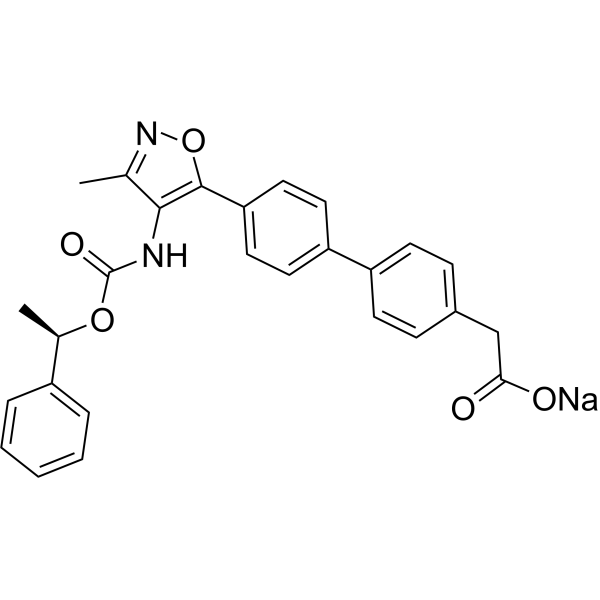 0 ImagesAM095 is a selective LPA1 receptor antagonist. The IC50 for AM095 antagonism of LPA-induced calcium flux of human or mouse LPA1-transfected CHO cells is 0.025 and 0.023 μM, respectively.
-
H2L 5765834
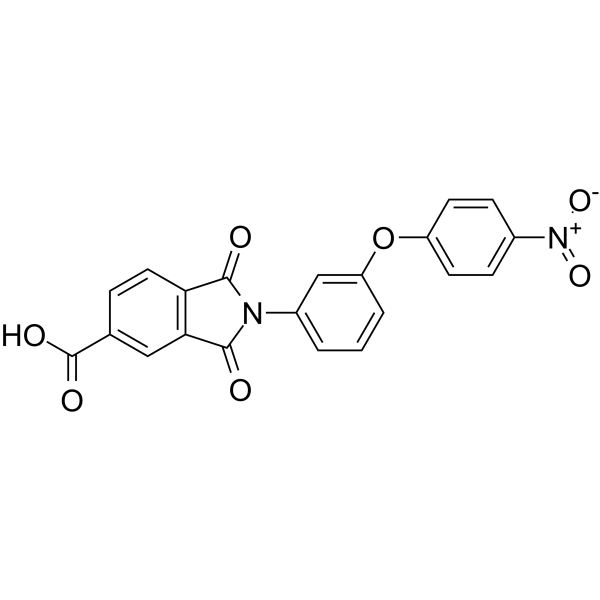 0 ImagesH2L 5765834 is an antagonist of lysophosphatidic acid receptors LPA1, LPA3, and LPA5, with IC50s of 94, 752, and 463 nM respectively.
-
ONO-9780307
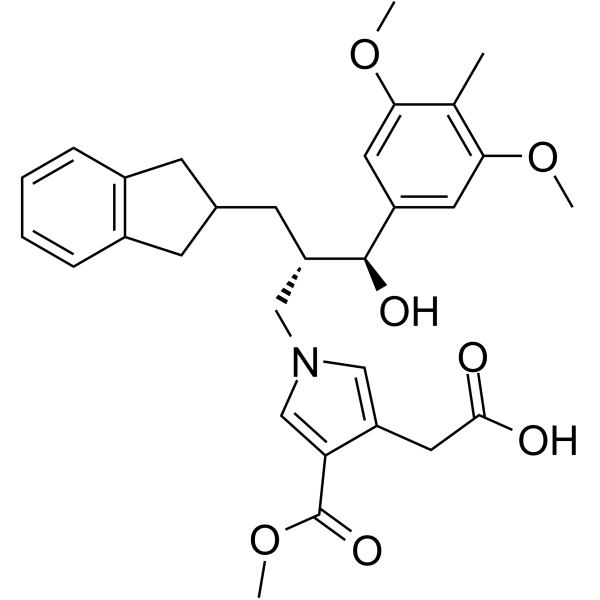 0 ImagesONO-9780307 is a specific synthetic LPA1 (lysophosphatidic acid receptor 1) antagonist with an IC50 value of 2.7 nM.
-
TAK-615
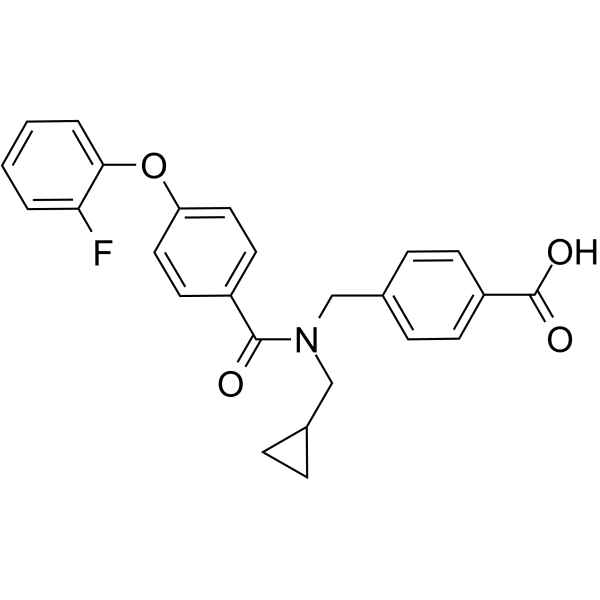 0 ImagesTAK-615 is a negative allosteric modulator (NAM) of the LPA1 receptor for the research of pulmonary fibrosis. TAK-615 binds the LPA1 receptor with high affinity (Kd high affinity of 1.7 nM and Kd low affinity of 14.5 nM).
-
ONO-0300302
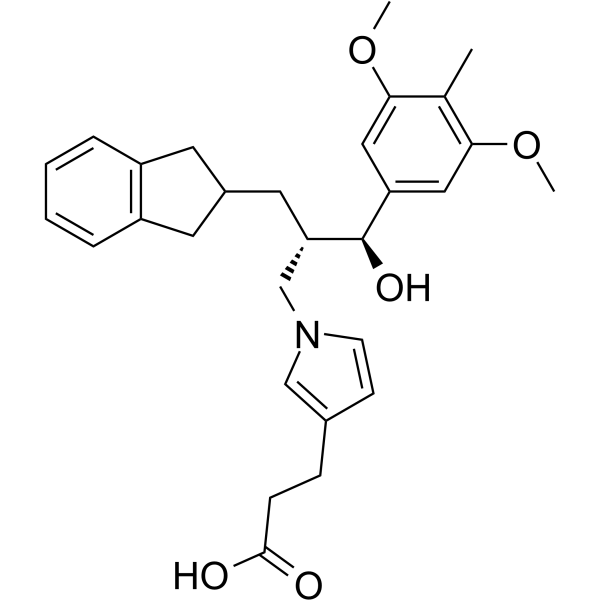 0 ImagesONO-0300302 is an orally active and potent LPA1 (lysophosphatidic acid receptor 1) antagonist, with an IC50 of 0.086 μM. ONO-0300302 is a slow tight binding inhibitor, and its binding affinity increases with time, with Kd of 0.34 nM (37 °C, 2 h). ONO-0300302 can be used for benign prostatic hyperplasia (BPH) research.
-
PIPE-791
 0 ImagesReferencia número: HY-184986No. CAS: 2901868-37-7PIPE-791 is an orally active, blood-brain barrier-permeable selective antagonist of LPAR1. PIPE-791 inhibits LPA-induced calcium mobilization, collagen expression, histamine release, and the activation of fibroblasts, microglia and macrophages. PIPE-791 induces oligodendrocyte precursor cell differentiation, myelination and remyelination, and increases the number of microglia in the retina of normotensive rats. PIPE-791 protects mature oligodendrocytes from cytokine-induced death, reduces the levels of pulmonary fibrosis markers and alleviates neuroinflammation in preclinical models. PIPE-791 can be used in the research of glaucoma, neuroinflammatory diseases, chronic osteoarthritis pain, idiopathic pulmonary fibrosis and multiple sclerosis.
-
HL001
 0 ImagesHL001 is an orally active small molecule inhibitor of Cyclophilin A (CypA) and a receptor antagonist of Lysophosphatidic acid 1 (LPA1). HL001 induces cell cycle arrest and apoptosis of tumor cells by p53. HL001 stabilizes p53 by down-regulating G3BP1, inducing reactive oxygen species and DNA damage. HL001 disrupts the interaction between MDM2 and p53-72R in a CypA dependent manner. HL001 has antitumor activity. HL001 can also be used to study pulmonary fibrosis.
-
Autotaxin-IN-8
 0 ImagesReferencia número: HY-181931No. CAS: 3058084-21-9Autotaxin-IN-8 (Compound 14E) is an orally active Autotaxin inhibitor with an IC50 of 14.2 nM against hAutotaxin. Autotaxin-IN-8 inhibits Autotaxin activity, MAPK activation, LPAR1 and p-ERK1/2. Autotaxin-IN-8 reduces the phosphorylation levels of JNK and p38. Autotaxin-IN-8 decreases collagen deposition in a mouse model of pulmonary fibrosis. Autotaxin-IN-8 can be used in research related to pulmonary fibrosis.

-
BrP-LPA sodium
 0 ImagesReferencia número: HY-148291No. CAS: 944265-88-7BrP-LPA sodium is a pan-opposite agent for lysophosphatidic acid (LPA). It has antagonistic activity against LPA1 (IC50 = 4520 nM), LPA2 (IC50 = 468 nM), LPA3, and LPA4. BrP-LPA sodium also has partial agonistic activity for LPA5, with its EC50 being 1282 nM. BrP-LPA sodium has ATX inhibitory activity. BrP-LPA sodium effectively inhibits the migration and invasion of breast cancer cells. BrP-LPA sodium achieves tumor regression and anti-angiogenesis in mice breast cancer xenograft model. BrP-LPA sodium can be used for the study of breast cancer.
-
BrP-LPA
 0 ImagesReferencia número: HY-W725737No. CAS: 944313-05-7BrP-LPA is a LPA antagonist/ATX inhibitor. BrP-LPA shows pan-antagonist activity towards LPA1-4 GPCRs. BrP-LPA decreases blood vessel density. BrP-LPA dose-dependently inhibits Lysophosphatidic acid-induced head-dip counts. BrP-LPA exhibits anticancer activity against breast cancer, colon cancer, and lung cancer. BrP-LPA inhibits anxiety-like behavior.
- 1



